
Articles

Featured Articles
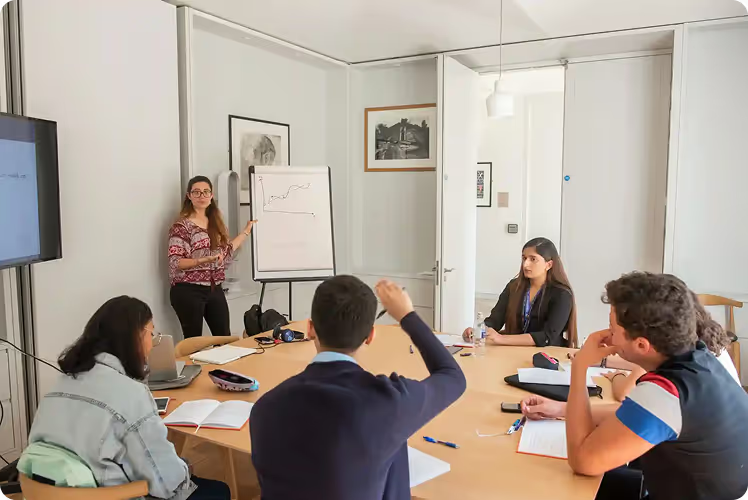
The Oxford tutorial system is a discussion-led approach where students actively engage with ideas in small groups, guided by expert tutors. Through independent preparation, in-depth conversation, and personalised feedback, it develops critical thinking, confidence, and a deeper understanding of subjects—focusing on how to think, not just what to learn.
Articles

History is the study of how past events, people, and cultures have shaped the present — helping us understand change, conflict, and human progress. At Oxford Summer Courses, students aged 13–24 can explore historical themes in Oxford or Cambridge, sharpening their research and critical thinking skills through personalised, expert-led learning.

Classical Civilisation explores the ancient worlds of Greece and Rome — their literature, philosophy, politics, and art — and how these civilisations continue to shape modern life. At Oxford Summer Courses, students aged 16–24 can study myths, epics, and ancient thought in Oxford through personalised, discussion-led learning with expert tutors.

Leadership is the ability to inspire, guide, and empower others to create meaningful change, combining communication, empathy, and decision-making. At Oxford Summer Courses, students aged 13–24 can explore leadership styles, ethical dilemmas, and team dynamics through personalised, discussion-based learning in Oxford and Cambridge.

Philosophy, Politics and Economics (PPE) explores how societies think, govern, and manage resources by combining critical insights from three powerful disciplines. At Oxford Summer Courses, students aged 16–17 can study PPE in Oxford through discussion-based tutorials that explore real-world issues like justice, power, and policy from philosophical, political, and economic perspectives.

Politics explores how power is exercised, decisions are made, and societies are governed — from local laws to global diplomacy. At Oxford Summer Courses, students aged 16–24 can study Politics in Oxford, engaging in debates and tutorials that cover ideologies, institutions, and the real-world impact of political systems.
Sociology and Anthropology explore how societies function and how cultures evolve, helping us understand identity, inequality, belief systems, and human connection across time and place. At Oxford Summer Courses, students aged 16–24 can study these subjects in Oxford, developing research, critical thinking, and cross-cultural skills through personalised, discussion-based learning.
Artificial Intelligence is the study of how machines can learn, reason, and solve problems — powering everything from voice assistants to self-driving cars. At Oxford Summer Courses, students aged 16–17 can explore AI in Cambridge through hands-on projects, ethical debates, and real-world case studies, building the skills to shape the future of technology.

Computer Science is the study of how computers solve problems through algorithms, programming, and data systems — powering everything from apps to AI. At Oxford Summer Courses, students aged 13–24 can explore key concepts like coding, cybersecurity, and machine learning in small-group classes tailored to their interests in Oxford or Cambridge.
Engineering is the application of science and maths to design solutions that improve how we live, from infrastructure to technology. At Oxford Summer Courses, students aged 13–15 explore the principles of engineering through hands-on projects in Oxford or Cambridge — gaining problem-solving skills and creative insight for the future.