.svg)
Oxford Starts here.
So Does the Best Summer of Your Life
Real Oxford and Cambridge colleges. Tutors who live inside their subjects. No fixed syllabus. And a letter of recommendation at the end that says something grades can't.
.avif)
You've had summers
You haven't had summers like this.
Most summers look good on paper and feel forgettable by October. Oxford Summer Courses is the one students talk about for years. Not because it's a prestigious name on a programme brochure — because something actually happens there.
The discussion that starts in a tutorial and ends hours later over dinner. The tutor who says something at 10am on a Tuesday that you'll remember when you're 30. The friend from a country you'd never visited who changes how you see a subject you thought you already understood.
That's the summer.
Oxford and Cambridge colleges and Harrow School — not a conference centre with a famous name on the door
Active academics and researchers — not hired for the season. They're the people who will write your letter of recommendation
In a class of six, you can't disappear. And the diversity in the room makes every conversation genuinely better
Written by the tutor who watched you think for two weeks. Included at every tier. No conditions
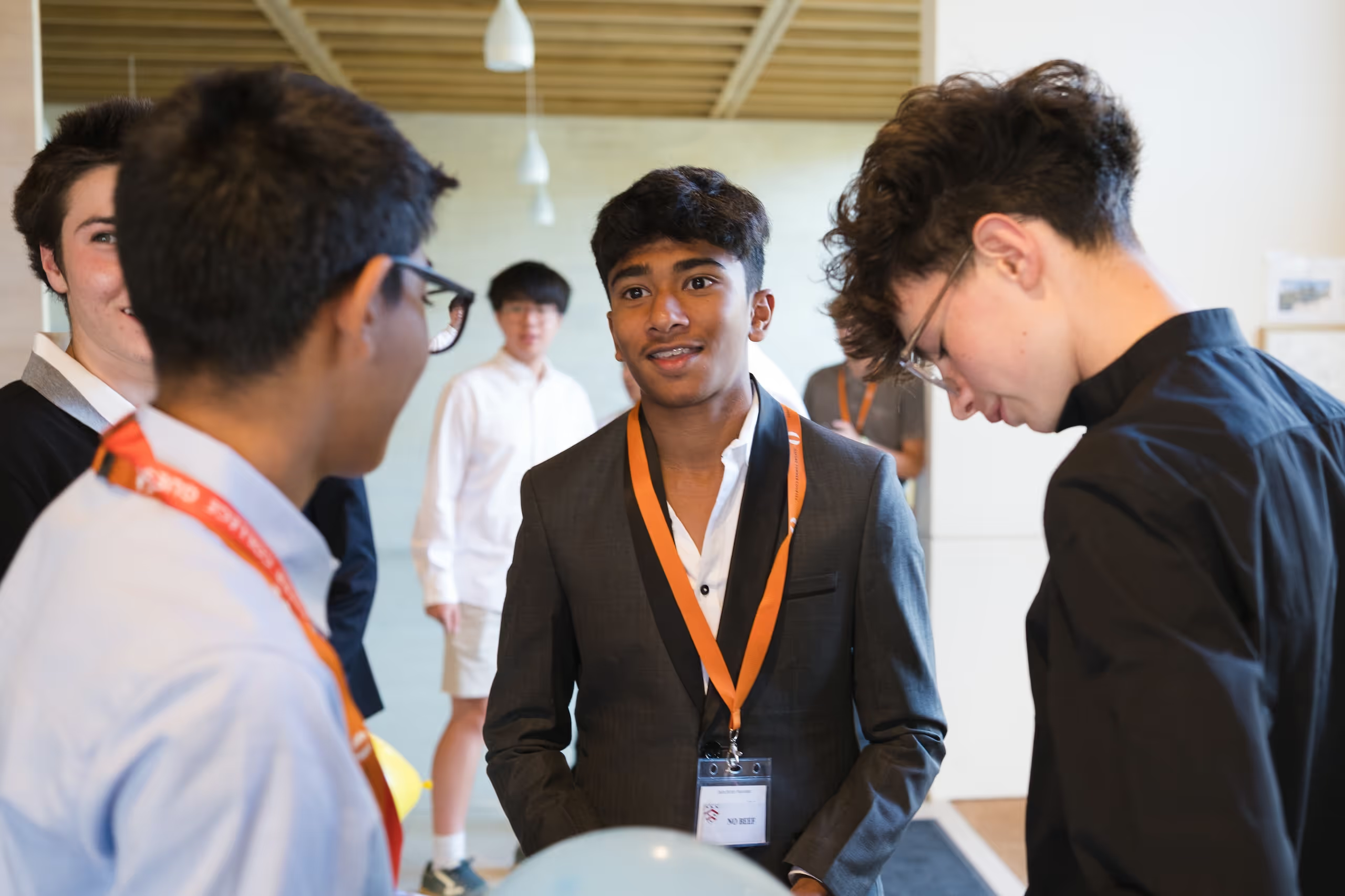
Most programmes teach at students. Oxford Summer Courses teaches with them.
The difference sounds subtle. It isn't. Teaching at means a syllabus, a schedule, a room of fifteen people taking notes. Teaching with means the tutor meets you where you are, builds on what you know, and follows the conversation wherever it goes.
That's the Oxford tutorial model. And almost nobody else does it.
Every day is different. Here's what most look like.
Warning: this schedule will ruin you for regular summers. By week two, most students can't believe they ever thought sitting at home was a reasonable use of August.
The same one used by Oxford undergraduates. Stone floors. High ceilings. Someone from three countries you've never visited is already arguing about something. Join in.
Six students. One tutor. One subject you actually care about. You'll be asked to defend an idea. You'll probably change your mind at least once. That's not failure — that's the whole point. Most students describe a moment around day three where they stop trying to get the right answer and start genuinely thinking.
Continue the argument from the tutorial, or start a new one. Coffee. Quadrangles. People from 30 different countries. The kind of conversations you didn't expect to be having.
Deeper into the subject. Case studies, problem sets, creative challenges, or full debate — depending on your subject and tutor. The content goes where the thinking goes.
Leadership workshops, field visits, law courts, labs, galleries, debating chambers. The stuff that doesn't happen in school. Or at any other summer programme.
Back in the dining hall. Occasionally a practitioner or researcher joins — in the subject you're studying. The conversations continue. Nobody wants to leave.
The river. College grounds. Film screenings. Student-organised events. Friends that form during two weeks of real intellectual work, in a historic place, with people from 150 countries. These ones tend to stick.
One subject. Go deep.
Over 40 subjects. Pick the one you're genuinely curious about — not the one that looks good on a CV. The content adapts around you. Your curiosity is the engine.
Exceptional Oxford
and Cambridge Tutors
Our summer school tutors are expert academics, passionate about their subjects, and they're here to guide you towards success.



.avif)


Not a certificate.
An actual assessment.
Every student leaves with a personalized letter of recommendation from their tutor. Not a form letter. Not a participation award. A specific account of how you think, argue, and engage with hard questions — written by someone who watched it happen in real time, in a room of six, over two weeks.
It goes into the university application. Admissions teams read it. It says things that grades can't.
Included as standard. Every tier. No conditions.
The tutorial ends at 5pm.
The education and fun doesn't.
The real magic happens in the in-between moments. The friendships that form over college dinners. The argument that started in the tutorial and ends three hours later in the college garden. The person from a country you'd never been to who changes how you see the world. You can't plan for any of it. That's the whole point.
Oxford and Cambridge have rivers. OSC has punt trips. There is nothing more chaotically fun than six students who've just spent two hours arguing about economics trying to navigate a flat-bottomed boat.
Lunch conversations at OSC tend to cover at least three continents. Students from South Korea, Brazil, and Nigeria debating something at the table next to you is not a promotional photo — it's just Tuesday.
Students live in the same colleges as Oxford undergraduates. Same dining halls, same libraries, same quadrangles. The ambition in the air is contagious. Most students leave wanting to come back.
Film screenings. Common room events. Something unexpected almost every evening. People with genuine curiosity, stuck in beautiful places together, tend to come up with good things to do.
Law courts. Laboratories. Galleries. Debating chambers. Afternoon enrichment is built into every programme — the kind of experiences that don't happen in school, and don't happen at other summer programmes.
Friends made at OSC tend to stick. Probably because they form during real intellectual work, in extraordinary places, with people becoming who they're going to be. Two weeks in. Forever out.
Don't take our word for it. Take theirs.
Families from 150 countries. The stories speak for themselves.
"The tutors don't just teach you to jump through hoops. They adapt to really make the most of your knowledge. I left thinking differently about everything."
"My tutor made me love Chemistry even more. He shared insights you don't find in textbooks. Genuinely the best summer I've ever had."
"Discussions were enriched by students from completely different backgrounds. Eye-opening, rewarding, and honestly one of those experiences I'll talk about forever."
Three places that have been taking ideas seriouslyfor centuries.
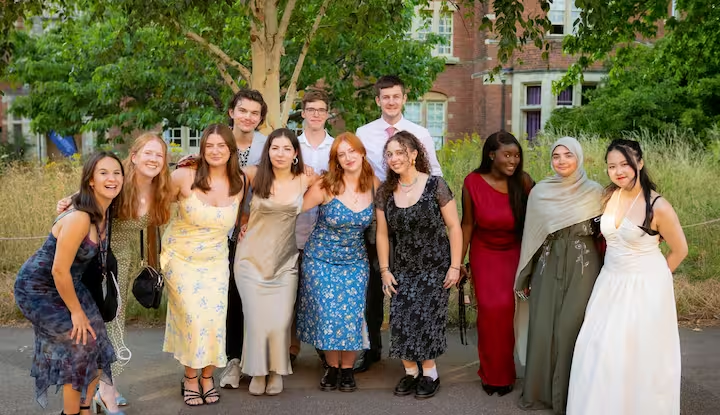
Oxford
The tutorial tradition. The Bodleian. 800 years of serious thinking. Classes of six in the rooms where the ideas actually live.
Oxford
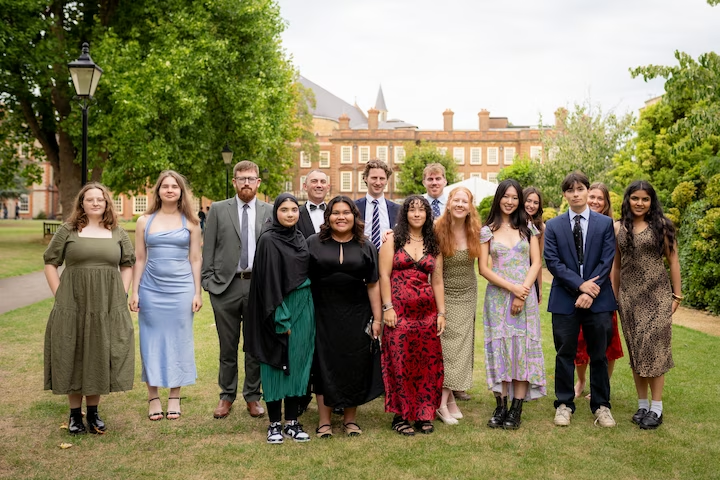
Cambridge
Scientific heritage. Architectural wonder. The River Cam. The kind of conversations that don't stop when the tutorial ends.
Cambridge

Harrow
World-class facilities. A focused, structured environment for younger students. Full board. Everything arranged.
Harrow
This is where it starts.
Tell us which subject you're interested in and we'll help you find the right programme, location, and dates. Most students hear back within one working day.